
Shared Loss, Shared Humanity: Understanding Collective Grief
This month, I’ve been touched by the shared grief of our nation.
Two weeks ago, it was the death of Canadian actress Catherine O’Hara. I was surprised by how much it affected me. I had been watching a lot of Schitt’s Creek lately; it had become my middle-of-the-night comfort show. Moira Rose had started to feel familiar, almost like someone I knew. So when the actress died, it felt strangely personal.
In a world that already feels heavy, it was like losing a friend. Grief, but with gratitude for a life that gave us so much humour.

This past week brought a very different kind of grief.
A mass shooting at a school in northern BC. Young kids. Teachers. The shooter’s own family. The shooter themselves. The layers of pain, anger, sorrow, and outrage are hard to navigate. It’s sad on top of sad. Suffering radiating outward from someone who was clearly in immense pain without enough support.
These deaths land differently than a private loss within a family or circle of friends. This is collective grief.
My first experience of collective grief
My first experience of it was at 15, when a girl at my school died suddenly of encephalitis. I didn’t know her, but I knew someone who did, so I had received news of her death before it was announced at school. The following day, the principal came on the PA system. I was in gym class. Everything felt crystal clear. I was fascinated to hear how he notified the student body, the words he used. And I was curious to see how everyone would react.
What followed was an eerie quiet, shock, and awkwardness about what to do next. Throughout the day, pockets of grief played out in the hallways and bathrooms. A memorial was held for the girl a week later. A mountain of purple flowers lay below her picture. Nearly the whole school showed up to pay their respect – even though not everyone knew her – it was a sign of connection and shared humanity.
A few years later, I felt it again. I worked concessions at an arena where a junior hockey team played every Friday to a packed crowd. One Friday morning, a player died in a car accident. That night, the arena was full but eerily quiet. Ribbons were handed out. I wore one, feeling slightly like an imposter because I hadn’t known him, yet also feeling part of something larger, a shared act of respect.
That’s collective grief.
How does collective grief impact us?
First, it unsettles our nervous systems. Even when we aren’t directly affected, our sense of safety shifts. We’re reminded how fragile and unpredictable life can be.
Second, it creates a strange mix of closeness and distance. We grieve alongside hundreds or thousands of others, yet may still feel alone in our own reactions. It can feel confusing to mourn someone we never knew, and still feel it deeply.
Third, it stirs older grief. Big losses often reactivate private ones: a parent, a miscarriage, a divorce, a diagnosis. Collective grief rarely stays contained to the present moment.
Finally, it reveals our interdependence. Whether we like it or not, we are connected. One death ripples outward. Harm to children reminds us of our own children, our communities. Sometimes we even feel compassion for the perpetrator, wondering what chain of suffering led to such devastation.
So what do we do with our collective grief?
We slow down.
In a culture that rushes past death, collective grief asks us to pause. To name what happened. To say the words: people died. Lives were lost. We are shaken.
We make space for conversation: vigils, gatherings, social media posts, check-ins.
We hold our kids a little tighter.
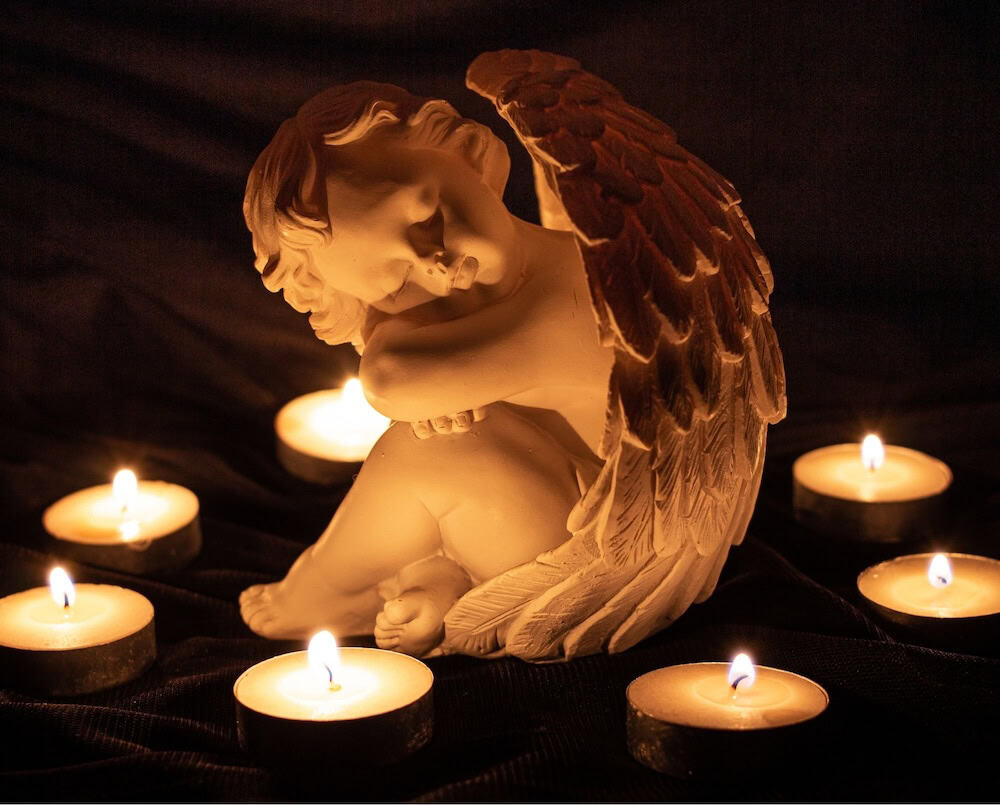
And we ritualize. Humans have always marked death together: candles, flowers, silence, music, shared meals. Ritual gives grief a container so it doesn’t spill into everything.
Most of all, we let it connect us. In a world hell-bent on dividing us, we acknowledge that as humans, parents, and Canadians, we have more in common than our differences.
Collective grief is shared humanity, and ideally, it softens us toward each other.
Death is never only individual; it is communal. That’s how it’s meant to be.

Karla Kerr
Funeral Director and Death Doula
Karla is passionate about fostering end-of-life conversations through education and open dialogue. She believes in confronting difficult topics with compassion, and that by stepping into the space created by grief and loss we tap into our shared humanity.
Subscribe to The Threshold
Join our monthly Threshold newsletter to receive tips, strategies and updates on future local events and workshops.